Reef mounds indicate timing of hydrocarbon charge off Seychelles
Carbonate mounds developed on Coetivy Bank and the northern Seychelles Plateau (Fig. 1 [72,361 bytes]) appear to have formed in response to pulses of hydrocarbon fluid migration along underlying faults during the late Paleocene and late Eocene. Gas chimneys emanating from these mounds are evident on seismic data, while gas sniffer and/or UV fluorescence anomalies have been recorded in the overlying waters.
Such a combination of hydrocarbon anomalies is indicative of minor active gas seepage and confirms the prospectivity of these features and their underlying sequences.
Historically, seepage of oil and gas has played a major role in the discovery of most of the world's petroleum provinces and their largest oil and gas fields.1 During the last decade there has been a resurgence of interest in the use of seepage as an exploration technique,2-4 so much so that monographs have been compiled on the subject.5-6
Offshore, the visible signs of seepage, principally sea surface slicks and coastal tar strandings, can be detected considerable distances from the point of actual seafloor leakage. In order to better locate these leakage points various techniques have been devised to detect hydrocarbons either within the near-bottom waters using gas sniffer sondes; from their escape signatures on the seafloor;5 7 or directly in the sediment package by seabed coring8 and/or reflection seismic data.4 9 10 11
Recently it has also been realized that both authigenic and biogenic carbonates proliferate above faults from which hydrocarbon seepage occurs, forming chemosynthetic reefs.12-13 When identified on seismic data, such reef/fault associations constitute seismic hydrocarbon indicators (SHIs), and the reefs/faults off Seychelles have been interpreted as SHIs.
Geology, source rocks
Although the Seychelles offshore is still a frontier petroleum province, considerable evidence exists that a viable petroleum system is present.This evidence includes minor hydrocarbon shows and the recent identification of oil-prone source rocks in three of the four exploration wells14 coupled with a widespread variety of SHIs.15 Less location-specific evidence includes gas sniffer and UV fluorescence anomalies and the common stranding of tar on many of the islands' beaches.16
The Seychelles microcontinent evolved through three phases of rift tectonics that were responsible for the Mesozoic breakup and dispersal of Gondwana. Rifting during the Triassic to Middle Jurassic produced between 2 km and 6 km of sediments in basins that developed along the present-day western and southern margins of the microcontinent. Depositional environments evolved from fluvial to marine deltaic and nearshore carbonate shoals.
Within these rift deposits, shales of the early Middle Jurassic deltaic section contain liptinitic coal composed of oil-prone Type II kerogen,14 while fluvial shales in the Triassic section contain gas-prone Type III kerogen. During the subsequent Late Jurassic and Early Cretaceous passive margin phase over 2 km of dark grey shales and siltstones were deposited in neritic to nearshore marine environments. Component kerogen throughout this sequence varies upwards from oil-prone Type II to gas-prone Type III,14 although the latter has generally been removed by subsequent erosion. These shales correlate in part to the proven Uarandab source rock shales of coastal Somalia.
A second phase of rifting began separating Seychelles from Madagascar during the Cenomanian to Santonian of the Late Cretaceous and is estimated to have produced over 4 km of sediment along the present-day southern margin of the microcontinent. This was followed by passive margin deposition of carbonates and shales during the Campanian and Maastrichtian.
Although only a reduced section of this rift/drift sequence has been drilled, from the geochemistry of well cuttings and of locally stranded tars, source rocks have been inferred to have developed initially in deltaic, then in shallow open marine environments.14 16
The final phase of rifting occurred between Seychelles and India during the latest Cretaceous followed by separation coinciding with the eruption of the Deccan flood basalts at the Cretaceous-Tertiary Boundary (KTB). No wells have penetrated rift deposits, but high TOC shales from the earliest (Paleocene) subsequent passive margin phase were found to contain Type III kerogen.14 Although gas-prone this source rock correlates to the carbonaceous Vasai or Panna formation that produced oil in the Deep Continental Shelf trend of the Bombay High oil province off western India.17-20 Deposition throughout the remainder of the Tertiary produced the thick shelf carbonates of the Seychelles Plateau and adjacent banks, with pelagic oozes in the deep off-bank areas.
Thermal history
The thermal history experienced by Seychelles has recently been determined to have been more complex than the single event model that proposes the KTB Deccan hotspot volcanism as the sole cause of source rock maturity. Although the Deccan event remains the principal heating event, apatite fission track analysis (AFTA) and basin modeling indicate that other heating events, both before and after the Deccan event, influenced source rock maturity and hydrocarbon generation. 21Chemosynthetic reefs
It is within the shallow water shelf carbonates of the early Tertiary that mounds interpreted as chemosynthetic reefs have been identified on seismic data, and examples are presented from Coetivy Bank to the south of the Seychelles Plateau and from the plateau's northern shelf (Fig. 1).Coetivy Bank. Reef mounds developed above faults occur at two levels within the thick Tertiary carbonate package beneath Coetivy Bank (Fig. 2 [127,274 bytes]). Correlation with the Constant Bank-1 well, drilled 77 km to the north (see Fig. 1), indicates these reefs to be late Paleocene and late Eocene in age. Above these reefs the seismic reflections (1991 data) display minor pulldown reminiscent of a gas chimney and thus suggestive of minor active gas seepage from the reefs. In the overlying waters, several ethane and isobutane gas sniffer anomalies occur (1983 data) along with strong UV fluorescence anomalies from the sea surface (1991 data, Fig. 3 [53,550 bytes]), both indicative of active hydrocarbon seepage.
In addition, tar is commonly found stranded on the beaches around the island. The geochemical characteristics of 36 analyzed samples indicate three distinctive tar types, two of which appear to be derived from Late Cretaceous shaly source rocks,14 one of deltaic derivation, and the other from an open marine source. The faults above which the reefs are developed extend down through more than 4 km of Late Cretaceous sediments (Fig. 2) and could thus have readily acted as conduits to hydrocarbons migrating from mature source rocks within this sequence.
Structural mapping at Top Paleocene level (Fig. 4 [103,773 bytes]) has identified a four-way dip closure with over 200 m vertical relief covering an area upwards of 100 sq km of the bank. Structures are also developed in the underlying block faulted Late Cretaceous rift sequence.
Northern Seychelles Plateau. A second example of likely chemosynthetic reefs associated with underlying faults is evident on seismic data from the northern shelf of the Seychelles Plateau (Fig. 1, Fig. 5 [225,446 bytes]). Again these reefs developed during the late Paleocene and late Eocene and are associated with a gas chimney of disrupted seismic reflections, indicative of minor gas seepage. Gas sniffer data from the overlying waters reveal a broad area of propane, normal butane, and total hydrocarbon anomalies (Fig. 6 [115,097 bytes]) supportive of such seepage. No UV fluorescence data have been gathered from this area.
Although several samples of a tar derived from a Tertiary marine shale have been analyzed from nearby Praslin Island (Fig. 1), maturity modeling following AFTA indicates that the known Paleocene source rock shale only reached early maturity late in the Tertiary.21 The source of the hydrocarbons responsible for the early Tertiary SHIs in this northern shelf area must lie within the underlying Pre-Tertiary section which has been structured by block faulting (Fig. 5).
Conclusions
The association of reefal mounds developed above faults that penetrate underlying source rock-bearing rift/ drift sequences in the Seychelles offshore is suggestive of a chemosynthetic carbonate origin.Seismic correlation from wells indicates that periods of significant hydrocarbon migration, and hence chemosynthetic reef growth, occurred at least during the late Paleocene, immediately following the principal heating event of the region (the Deccan volcanic event), and again in the late Eocene.
References
- Hedberg, H.D., Utilization of hydrocarbon seep information, AAPG Memoir 66, 1996, p. 111.
- Dickinson, R.G., and Matthews, M.D., Regional microseep survey of part of the productive Wyoming-Utah thrust belt, AAPG Bull., Vol. 77, 1993, pp. 1,710-22.
- Williams, A.K., Kloster, A., Duckworth, R., and Piggott, N., The role of airborne laser fluoresensor (ALF) and other seepage detection techniques in exploring frontier basins, in Petroleum Exploration and Exploitation in Norway, S. Hanslein, ed., Norw. Petrol. Soc., 1995, pp. 421-431.
- Traynor, J.J., and Sladen, C., Seepage in Viet Nam-onshore and offshore examples, Mar. Petrol. Geol., Vol. 14, 1997, pp. 345-362.
- Hovland, M., and Judd, A.G., Seabed pockmarks and seepages: Impact on geology, biology and the marine environment, Graham and Trotman, London, 1988, 293 p.
- Schumacher, D., and Abrams, M.A., Hydrocarbon migration and its near-surface expression, AAPG Mem. 66, 1996, 446 p.
- Baraza, J., and Ercilla, G., Gas-charged sediments and large pockmark-like features on the Gulf of Cadiz slope (SW Spain), Mar. Petrol. Geol., Vol. 13, 1996, pp. 253-261.
- Hvoslef, S., Christie, O.H.J., Sassen, R., Kennicutt, M.C. II, Requejo, A.G., and Brooks, J.M., Test of a new surface geochemistry tool for resource prediction in frontier areas, Mar. Petrol. Geol., Vol. 13, 1996, pp. 107-124.
- Abrams, M.A., Geophysical and geochemical evidence for subsurface hydrocarbon leakage in the Bering Sea, Alaska, Mar. Petrol. Geol., Vol. 9, 1992, pp. 208-221.
- Hovland, M., Croker, P.F., and Martin, M., Fault-associated seabed mounds (carbonate knolls?) off western Ireland and northwest Australia, Mar. Petrol. Geol., Vol. 11, 1994, pp. 232-246.
- Welper, O., Allen, J.L., and Fiongos, G., Seismic hydrocarbon indicators lower risks, OGJ, Nov. 4, 1991, pp. 66-70.
- Beauchamp, B., Harrison, J.C., Nassichuk, W.W., and Eliuk, L.S., Lower Cretaceous (Albian) serpulid-bivalve carbonate 'mounds' related to hydrocarbon seeps, Canadian Arctic Archipelago, Can. Soc. Petrol. Geol., Vol. 13, 1989, pp. 706-712.
- Hovland, M., Do carbonate reefs form due to fluid seepage? Terra Nova, Vol. 2, 1990, pp. 8-18.
- Plummer, P.S., Joseph, P.R., and Samson, P.J., Depositional environments and oil potential of Jurassic/Cretaceous source rocks within the Seychelles microcontinent, Mar. Petrol. Geol. (in press).
- Plummer, P.S., Seismic anomalies suggest giant oil fields may lie off Seychelles, OGJ, Aug. 29, 1994, pp. 93-97.
- Plummer, P.S., Origin of beach-stranded tars from source rocks indigenous to Seychelles, AAPG Bull., Vol. 80, 1996, pp. 323-339.
- Banerjie, V., Mathur, P., and Mathur, M., Geochemical exploration efforts in Bombay offshore basin, in Integrated exploration research: Achievements and perspectives, J. Pandey and V. Banerjie, eds., conference proceedings, KDMIPE India, 1991, pp. 387-393.
- Pande, A., Khan, M.S.R., Singh, B.P., Haraza, P.N., Nain, K., Tripathi, G.K., Misra, K.N., and Chandra, K., Geochemical index fossils in crude oils in Indian sedimentary basins, Indian J. Petrol. Geol., Vol. 1, 1992, pp. 75-84.
- Mathur, S., Sethi, H.S., Goswami, B.G., Pandey, S.C., Sapru, R.K., Chaudhary, D.R., and Misra, K.N., Biomarker geochemistry of oils of Neelam field and some DCS structures, in Proceedings 2nd Seminar on Petroliferous Basins, India, S.K. Biswas, ea., Indian Petroleum Publications, Dehra Dun, 1993, pp. 443-454.
- Samanta, U., Mishra, C.S., and Misra, K.N., Indian high wax crude oils and the depositional environments of their source rocks, Mar. Petrol. Geol., Vol. 11, 1994, pp. 756-759.
- Geotrack International and Waples, D., Seychelles microcontinent: Constrained basin modelling using apatite fission track analysis and vitrinite reflectance to assess the history of hydrocarbon generation, Geotrack Report 622, 1997.
The Author
![(Fig. 1 [72,361 bytes])](http://images.pennwellnet.com/ogj/images/ogj2/9619jfpl01.gif)
![(Fig. 2 [127,274 bytes])](http://images.pennwellnet.com/ogj/images/ogj2/9619jfpl02a.gif)
![Fig. 3 [53,550 bytes]](http://images.pennwellnet.com/ogj/images/ogj2/9619jfpl03.gif)
![(Fig. 4 [103,773 bytes])](http://images.pennwellnet.com/ogj/images/ogj2/9619jfpl04.gif)
![Fig. 5 [225,446 bytes])](http://images.pennwellnet.com/ogj/images/ogj2/9619jfpl05a.gif)
![(Fig. 6 [115,097 bytes])](http://images.pennwellnet.com/ogj/images/ogj2/9619jfpl06.gif)
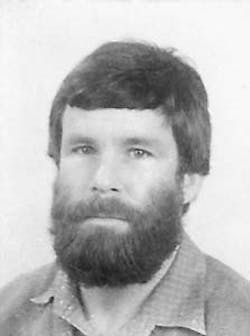
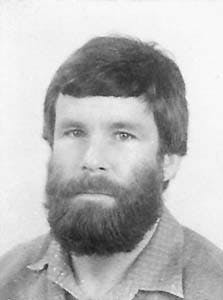
Phillip S. Plummer is the head of resource management for Seychelles National Oil Co. Ltd. He previously worked as a geophysical interpreter in exploration ventures for Shell International onshore Oman and Tanzania and off Gabon, as well as in Shell's geophysical review group in Holland. Later he began consulting independently in Australia and New Zealand, where he has worked both land and offshore data. He has a PhD degree in Precambrian stratigraphy and sedimentology from Adelaide University, South Australia. E-mail: [email protected]
Copyright 1998 Oil & Gas Journal. All Rights Reserved.