Historic OPEC/non-OPEC accord puts brakes on oil price plunge
Brent crude for prompt delivery reached its lowest price since 1988 on Mar. 17. When trading closed in London that day, it stood at $11.24/bbl, while Brent crude for May delivery was priced at $12.06/bbl.
The crisis prompted Mexico to broker an unprecedented deal with Saudi Arabia and Venezuela to cut their combined exports by a total 600,000 b/d.
The three countries' energy ministers called on Organization of Petroleum Exporting Countries (OPEC) members and non-OPEC oil exporters to help reduce worldwide output by at least 1.2 million b/d.
Announcement of this agreement on Mar. 22 gave oil prices an initial boost: Prompt Brent jumped $1.92/bbl in trading on Mar. 23 to close at $14.45/bbl, while May Brent jumped $1.64/bbl to close at $15.03/bbl.
Yet prices for Brent crude fell in London trading on Mar. 24, as traders reflected on the ultimate effects of the cutback deal. So prompt Brent closed on Mar. 24 at $14.11/bbl, and May Brent closed at $14.59/bbl.
OPEC ministers postponed a meeting on Mar. 16, which was originally intended to be a routine quota monitoring committee gathering but which was subsequently opened to all OPEC energy ministers. The meeting was rescheduled for Mar. 30.
Leo Drollas, chief economist at London's Centre for Global Energy Studies, said the Vienna meeting looks like it is being turned into a full ministerial gathering and that OPEC's next step must be to set production cut promises into a formal quota agreement.
Market reservations
Drollas noted that it appeared that the Mexican energy ministry, rather than state firm Petroleos Mexicanos (Pemex), had brought Saudi Arabia and Venezuela together."This latest deal appears to be small beer, really," said Drollas, "and the markets have taken it this way, too. It is interesting but not the end of the story.
"The price has begun to drift down and will fall further and will only improve again if at least 1.2 million b/d of OPEC production and 400,000 b/d from other producers is taken out. Even this will not be enough to get the price back up to $18/bbl."
Continued low oil prices are expected to induce Iraq to raise exports to meet income requirements under the United Nations-sponsored oil-for-aid scheme. A further problem is that refiners have built stocks and now may wish to deplete them a little.
Drollas said Iraq is currently producing about 1.9 million b/d of oil and claims capacity to deliver 2 million b/d. This would enable Iraq to export 1.6 million b/d, said Drollas, but this might not need to happen if prices stay comparatively high.
"Also," said Drollas, "crude oil stocks are higher by 2 days than this time last year and building up, creating a huge overhang in supply/demand. The near-term zero stock-change call on OPEC production is 27 million b/d.
"Yet if refiners decide to de-stock, the call on OPEC will be less than 26 million b/d."
Accordingly, cutting 1.2 million b/d from OPEC's current output of more than 28 million b/d would not be enough.
"It would take a further 1 million b/d reduction in global output to bring prices up again, and this will not be possible without a ministerial meeting in Vienna," Drollas said.
Nizam Sharief, director of energy research for Houston-based Hornsby & Co. Inc., echoes that notion:
"There needs to be at least 2 million b/d on an annual basis removed from supply. Saudi Arabia has agreed to reductions, but have they really said they will cut production, or are they saying they will hold (crude oil supplies) from the market?"
What happens with this inventory 270 days later? Sharief asked. And what governing body will have the power to enforce any agreements reached between OPEC and non-OPEC members?
And there won't be much relief forthcoming in holding back inventories, contends Mark Urness, a senior energy analyst with Salomon Smith Barney in New York. Urness isn't buying the idea that inventories can continue to build and be dumped on the market later. He points out that "floating" crude oil inventories-crude oil held in storage aboard ships-are already too high to absorb more supply.
Arnstein Wigestrand, vice-president for crude oil and NGL trading at Saga Petroleum AS, Oslo, said that, while the recent low oil price was a problem, "We've been there before. This price level was not shocking but concerning for many countries."
Wigestrand said that if OPEC continues to produce at current levels (see table, p. 22, the 1.3 million b/d overproduction in the first quarter will expand to 3.5 million b/d in the second quarter and 2.9 million b/d in the third quarter. He said that any market-boosting move would have to come from OPEC: "Non-OPEC producers won't make agreements with OPEC unless OPEC producers obey their own quota agreement.
"OPEC will have to meet and agree, and markets will have to see them doing what they promise, before prices can fully recover. For OPEC to meet on Mar. 30 and not agree would be a bigger disaster than for them not to meet at all."
While Drollas sees market reaction to the promised cuts as muted, he does see a little positive potential in market fundamentals.
"The end of March," said Drollas, "marks the end of the season for refinery turnarounds in the U.S., so companies will be looking to buy spot cargoes. Also, Europe's turnarounds, which traditionally begin in April, are expected to be light this year.
"April is also the time when refiners usually begin stocking up on products for the driving season, so there are some bullish factors around. We might get prices staying at the current level through April and May, then falling away as Iraqi barrels come back in."
Historic shift?
Sharief contends that what OPEC has recognized may prove to be a historic shift in how that organization works in the future."OPEC cannot fix this problem alone. They have to have the cooperation of non-OPEC producers."
Saudi Arabia alone has the kind of leverage to enforce such cooperation. The Saudis want to gain market share and are willing to "bring the pain" to other producing countries to accomplish that goal, Sharief contends. Crude oil prices at $10-12/bbl could be sustained long enough to significantly damage some producer countries' economies, he said.
"They want to force non-OPEC producers to slow their production growth," he said.
George Baker, long-time specialist on Mexico's petroleum sector and publisher of Mexico Energy Intelligence, also sees an historic precedent in the accord:
"The fact of an agreement with non-OPEC members suggests that OPEC, by itself, has been reduced largely to a paper organization without internal discipline or convening authority over its members. The participation of Mexico creates a 'meta-OPEC' based on common interests, not formal organizational ties," he said.
John Lichtblau, chairman of Petroleum Industry Research Foundation Inc., New York City, said that Mexico's involvement is historic. "For the first time, a non-OPEC country was instrumental in starting the reduction. I think it was Mexico that brought Saudi Arabia and Venezuela together."
He explained that most of Mexico and Venezuela's exports go to the U.S. and "without Mexico, Venezuela would not have been willing to cut."
Lichtblau said that does not mean that Mexico will consider joining OPEC but is likely to continue cooperating with it.
Feud over?
Although analysts are doubtful that OPEC members and non-OPEC producer countries can do more than pay lip service to production quotas, some think the feud between Saudi Arabia and Venezuela may be over.The pain has already been registered in Venezuela, where the government significantly cut its national budget to reflect lower revenues as crude oil prices fell, said Sharief.
Salomon's Urness added, "This has been a lose-lose situation until now. Venezuela blinked a lot sooner than people thought they would. The Saudis were losing, too, but they wanted to teach Venezuela a lesson for their aggressive quota cheating."
Sharief acknowledged that analysts were surprised by Venezuela's quick decision to seek an end to the feud. He said analysts may have assumed state oil company Petroleos de Venezuela SA's strategic refinery and marketing alliances in North America would offer staying power.
"Certainly you would think what they were losing on (the) crude oil side, they could make up on the retail side," he added.
Mexico-Venezuela axis
Drollas said it is currently "fashionable" to see the cooperation between Mexico and Venezuela for this deal as a threat to the sovereignty of OPEC and that too much should not be read into this pairing."Mexico and Venezuela have common interests," said Drollas, "but I don't see them as long-term partners. Both their state firms are commercially minded, and both are competing to sell more oil into the U.S."
Baker sees that competitive advantage shifting.
"Given that Mexico, Venezuela, and Saudi Arabia in 1997 were all at roughly 17% of the U.S. crude oil import market, the agreement seems to give Mexico an advantage over the others, as its proposed export-reduction quota is the least. (However), Venezuela, owing to its larger investment in U.S. refineries and retail outlets, is the best positioned of the threeellipseto compete in the U.S. oil market."
Philip K. Verleger, of PKVerleger LLC, Concord, Mass., noted that Mexico had to cut its budget $1.3 billion in January due to sagging oil prices and another $1 billion Mar. 24.
"Oil policy decisions were left to the petroleum ministry until financial conditions got really tough. Ultimately, the finance ministry had to look at the situation critically."
Verleger said Venezuela and Mexico had been especially hard hit by the price slump because "they almost had to give away their heavy crude output" because of a shortage of coking capacity. "You have to develop coking capacity at the same pace as the heavy crude productive capacity, Verleger said."
"In the future, the really interesting question is how Russia will cooperate on this. Over time, I would expect Russia to have more interest in playing this game with OPEC."
Norway's reluctance
Marit Arnstad, Norway's minister of petroleum and energy, met in Oslo with Mexico's Energy Minister Luis T?llez on Mar. 19. The Norwegian ministry said only that they discussed the current situation and future trends.Norway's ministry said, "On the political level, Mexico and Norway have had six meetings in the last 6 years. Like Norway, Mexico is a substantial producer and exporter of energy, and on many issues the two countries have coinciding interests."
While markets awaited news on which other producers would step forward to join Mexico, Saudi Arabia, and Venezuela in announcing cuts, speculation continued as to whether Norway would follow suit.
Yet Arnstad told journalists on Mar. 20 that "...Norway is not prepared to take a position on reduction. In the short term, today's price would not have a very harmful effect on the Norwegian economy.
"Reduced production levels are not being discussed, although the government might have plans to weigh the advantages and disadvantages of introducing a queuing system for future investment offshore Norway."
Vienna critical
Lichtblau said the Vienna meeting will be very risky for OPEC."They know the world is watching them. If anything goes wrong at this meeting, the oil market will collapse."
Lichtblau said the concerted action of Mexico, Venezuela, and Saudi Arabia was a step in the right direction but probably only a half step.
He said the total production cuts are much less than the three nations said they would achieve, maybe half of it.
"For instance, they count Norway and Russia as cutting back, and there's no announcement yet from either of those two countries."
Lichtblau said actual reductions (by the original trio) would be less than 1 million b/d, although more may be announced at the Vienna meeting. But he said the three nations did succeed in reversing the downward price trend.
"If nothing had happened, the price would be even lower today, although it's still not a high price, in the $15.50 range."
Cuts genuine?
Houston analyst Purvin & Gertz's Tom Manning questions whether the proposed cuts will involve genuine reductions in production."I think everybody realizes that somebody's got to take some oil off the market. But there's always the question of how much is talk and how much is real.
"Are the (proposed cuts) reflecting that people aren't buying as much oil, or are they reflecting that they're really going to cut (production)?," he asked.
"With demand declining in certain (Asian) countries, you're certainly not going to get the 800,000-1 million b/d (demand) increase that you had last year," said Manning.
"Last year, non-OPEC increased output, and OPEC increased output. Obviously, something has to give."
OPEC historically has chosen the role of the swing producer, says Manning, while non-OPEC countries have just produced at whatever rate they could.
"Nobody wants to cut production. But, if OPEC has chosen the role of swing producer, then they're the ones that need to cut production."
"OPEC is at best a very loosely knit group," said Manning. "They get together and they set quotas, then they all go out and produce what they want to."
Venezuela has been increasing production significantly, totally ignoring its quota, he says. "Now, they're saying they're going to cut back. What does that mean? They haven't said they were going to cut back to their quota, have they?"
If the reduction under consideration by the signatories of this recent agreement is only 1 million b/d, it's not enough, says Manning.
"Whether they say they're going to cut production or not, people can't take the oil because it's not going to be run (in refineries) in Asia. But, obviously, you can affect the Merc (New York Mercantile Exchange) price by saying you're going to cut production.
"Whether you affect the long-term price depends on whether you really do or not. And that will show up in the market weeks or months from now, Manning added.
Urness said, "The real problem is it (the agreement to cut production) is difficult to enforce. It really is more of a gentleman's agreement. There doesn't appear to be any way for it to be effectively monitored. That's what the market is saying today with crude prices sliding again."
"(The agreement is) definitely a step in the direction of firming up the price of oil," added Manning, "which helps everybody."
Long-term problem
A fundamental problem that will continue to haunt global oil markets remains to be dealt with, energy analysts pointed out. Exploration and production technology advances that have helped lower finding and production costs will continue to exert downward pressure on crude oil prices as long as current demand continues to fall short of supply."In the short term, this agreement will help (prices)," Urness said. "The long-term problem (of oversupply) will be solved with incremental growth once the effects of El Nino are over and Asia's economic crisis subsides. In that scenario, we should see 1.5 million b/d demand growth within 12 months."
Hornsby & Co.'s Sharief also views last week's agreement as short-lived for crude oil markets. "On the surface," he explained, "the agreement between the Saudis and Venezuela looks good. But the problem is bigger than that. The problem is the technology that fosters lower finding and producing costs."
Although Venezuela and other producing countries took big hits as oil prices fell, analysts also pointed out that U.S. stripper well and other "highly leveraged" crude oil producers were facing difficult economic times in the short term.
"The economies of consuming countries are the beneficiaries of lower prices," Sharief said. "But stripper well producers in the U.S. and states along the gulf heavily dependent on crude oil production (to fuel local economies) have found this terrible."
Texas, Louisiana, and Oklahoma producers could fare better than some, he added. "Where producers in these states have a balanced production of (natural) gas (to crude oil), economies will be less impacted."
Heavy-light differential
The quality of the crude being produced also figures in the degree of pain an oil producer is feeling today.Heavy oil sells at a discount to light oil, but the cost of production is higher for heavy oil. "Obviously, heavy oil producers get hurt," said Manning. "With this price crash we've had, the economics of heavy oil production go way down."
"If you're producing light crude out in the Bay of Campeche with a 20,000-25,000 b/d flow rate, your cost of production isn't influenced very much." On the other hand, said Manning, "Canadian heavy oil producers are trying to dig the oil up out of the ground with a drag line and trying to make money at these prices. It just doesn't work."
When price of oil drops to where they're shutting in stripper wells in West Texas or heavy oil production in California and Canada, this is forced by the marginal producers, says Manning, because each producer works to his own economics.
Canadian woes
Low crude oil prices are taking a toll on crude oil drilling and heavy oil development in western Canada.Imperial Oil Ltd., Toronto, has suspended development of Phases 1-10 of its heavy oil project at Cold Lake, Alta.
The company said that low crude oil prices, a wide differential between light and heavy crude prices, and high diluent costs are putting pressure on profitability of the operation (see related story, p. 25). It said it is not shutting in any production. The suspended development work is to replace existing wells that will be depleted in 1999. There is currently a differential of about $7.50 (U.S.)/bbl between light and heavy crude prices in Canada.
The suspension covers all field development work, including drilling and construction of field facilities. Discretionary field expenses, including steaming operations, are being evaluated.
Imperial said it is continuing regulatory work to obtain approval of Cold Lake expansion Phases 11-13. The company currently produces more than 100,000 b/d of heavy crude from Cold Lake.
A number of other heavy oil producers in western Canada have shut in production since prices began falling last fall.
PanCanadian Petroleum Ltd., Koch Exploration Ltd., and Ranger Oil Ltd. are other major companies that have cut staff, scaled back drilling plans, or reduced production. Companies are also looking at switching to natural gas exploration and production where increased pipeline capacity to export markets is expected to boost prices.
The Canadian Association of Oilwell Drilling Contractors is expected to reduce shortly a preliminary forecast of 16,600 wells for 1998 when additional data is available. A record 16,500 wells were drilled in 1997. Some analysts expect the 1998 estimate to drop as low as 13,000 wells because of a reduction in oil wells.
California depression
One California independent contends that the effects of the current oil price plunge is even worse than it was in 1986:"The price of the benchmark California 13° gravity heavy oil that is produced from the giant San Joaquin Valley oil fields is $7.25/bbl, compared with $7.30/bbl in 1986," said Chris Hall, president of Drilling & Production Co., Torrance, Calif. "One major refinerellipsehas posted $0.50 lower to $6.75. This level was last seen in December 1973 at the time of the first oil price shock 24 years ago.
"These are real prices; they don't account for the effects of inflation or increased operating costs. In 1986, a typical oil field worker was earning $13/hr; today, he is earning $19, or almost 50% more."
Hall contends that, at current prices, about 88% of the oil production (about 850,000 b/d) in California is currently uneconomic to produce (see chart, p. 24). That means that producers in the state are losing money at the rate of more than $1 million/day, he estimates. He figures that oil prices would have to rise $2/bbl before 90% of California's oil production is again economic.
U.S. independents react
U.S. independents have called on their government for relief from the oil price squeeze.James Stafford, president of the National Association of Royalty Owners, said, "OPEC's blatant overproduction of crude has given the gas guzzlers of this nation a false sense of euphoria as pump prices plunge to 1973 levels.
"However, the average savings in gasoline prices amounts to only an individual saving of $10/month, while our nation's 500,000 marginal wells are teetering on disaster. That leaves us unwitting hostages to unstable and erratic overseas powers as we lose more local sources of crude oil.
"This amounts to a politically endorsed Ponzi scheme against the American consumer."
George Yates, chairman of the Independent Petroleum Association of America, and Stephen Layton, president of the National Stripper Well Association, wrote President Bill Clinton, asking his administration to act.
They said 8,000 independents, which drill 85% of the wells and produce 40% of the nation's crude, are facing a crisis.
They said the price drop threatens the 500,000 U.S. marginal wells, which produce 1.3 million b/d, a sixth of the country's production.
Yates and Layton urged Clinton to issue an executive order to mitigate the national security threat of oil imports.
The two associations are working with representatives to develop a marginal well tax credit, which would phase in as the average U.S. wellhead oil price fell below a specific level. They said a bill would be introduced soon.
Yates and Layton also urged the administration and Congress to stop the mandated sale of $207.5 million worth of crude from the Strategic Petroleum Reserve before Oct. 1.
"At times of low prices, the government should be adding oil to the SPR, not further saturating the market with crude oil," they wrote.
Members of the California Independent Petroleum Association were in Washington, D.C., last week, also seeking relief.
CIPA asked Congress, DOE, and the Commerce Department to investigate the current market conditions for California oil producers, identify the sources and quantity of imports, and examine why the price for Kern River crude is half that of West Texas intermediate.
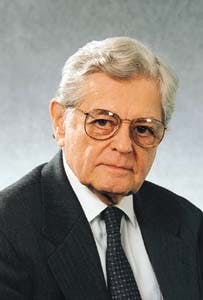
John Lichtblau
PirincThe Vienna meeting will be very risky for OPEC. They know the world is watching them. If anything goes wrong at this meeting, the oil market will collapse.
![OPEC's February Production [49,145 bytes]](http://images.pennwellnet.com/ogj/images/ogj2/96132201.gif)
![California Production Economics [112,603 bytes]](http://images.pennwellnet.com/ogj/images/ogj2/9613jnop01.gif)
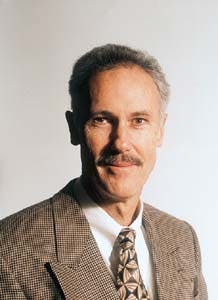
George Baker
Mexico Energy
Intelligence"The fact of an agreement with non-OPEC members suggests that OPEC, by itself, has been reduced largely to a paper organization without internal discipline or convening authority over its members. The participation of Mexico creates a 'meta-OPEC' based on common interests, not formal organizational ties."
Copyright 1998 Oil & Gas Journal. All Rights Reserved.